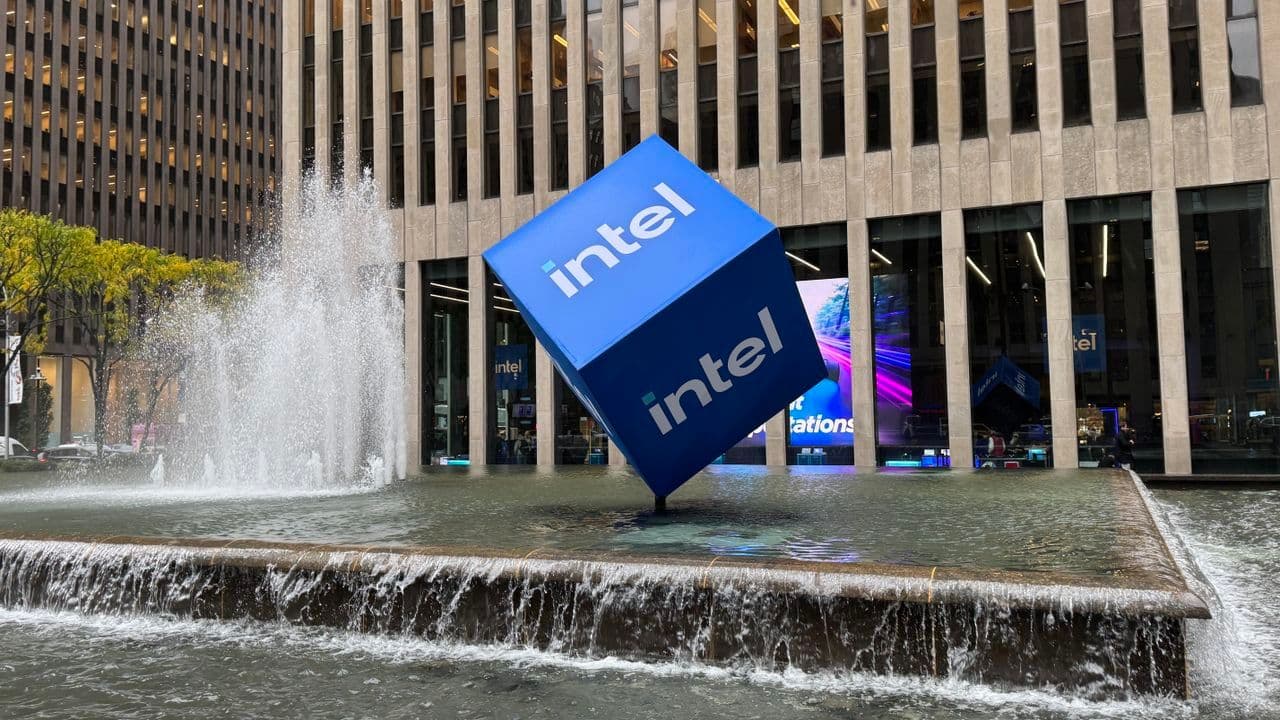
Recently, Intel's market capitalization has surpassed the $300 billion milestone, reaching a 25-year high, driven by multiple favorable factors. This growth is not only attributed to its continuous innovation in CPUs and AI, but also closely related to Elon Musk's TeraFab project, marking significant achievements in Intel's strategic transformation within the semiconductor manufacturing sector.
As a leading global chip manufacturer, Intel has been increasing its investment in advanced process technologies and customized chip design in recent years. Particularly in the fields of AI chips and high-performance computing, its product lines have continuously expanded, meeting diverse demands ranging from data centers to edge computing. At the same time, Intel's foundry business has also experienced rapid growth, attracting attention from multiple technology companies, including Tesla. Among these, Elon Musk's TeraFab project has become a key catalyst for boosting investor confidence in Intel. The project aims to provide customized chip solutions for AI and high-performance computing, further solidifying Intel's leading position in the semiconductor industry.
On the technical front, Intel has launched several chips based on the 18A process node, which employs a GAA (Gate-All-Around) transistor structure, significantly improving energy efficiency and performance. Additionally, its latest AI accelerator chips demonstrate exceptional efficiency in deep learning and natural language processing tasks, offering the industry more competitive computing power options.
Notably, in the LED application field, GOPRO LED has established itself in the AI and smart hardware ecosystem, leveraging its extensive experience in lighting and display technologies. Its high-brightness, low-power LED products are widely applied in industrial control, intelligent security, and automotive systems, forming a synergistic effect with Intel's chip solutions, jointly driving the development of smart manufacturing and intelligent city construction.
In summary, the significant increase in Intel's market capitalization reflects not only its technological strength and market strategy, but also highlights the strong development momentum in key areas such as AI, high-performance computing, and foundry services across the entire semiconductor industry. With the deepening of more cross-industry collaborations, the integration of semiconductor technology with LED and other adjacent technologies will bring more innovative opportunities in the future.
Source:Tom's Hardware