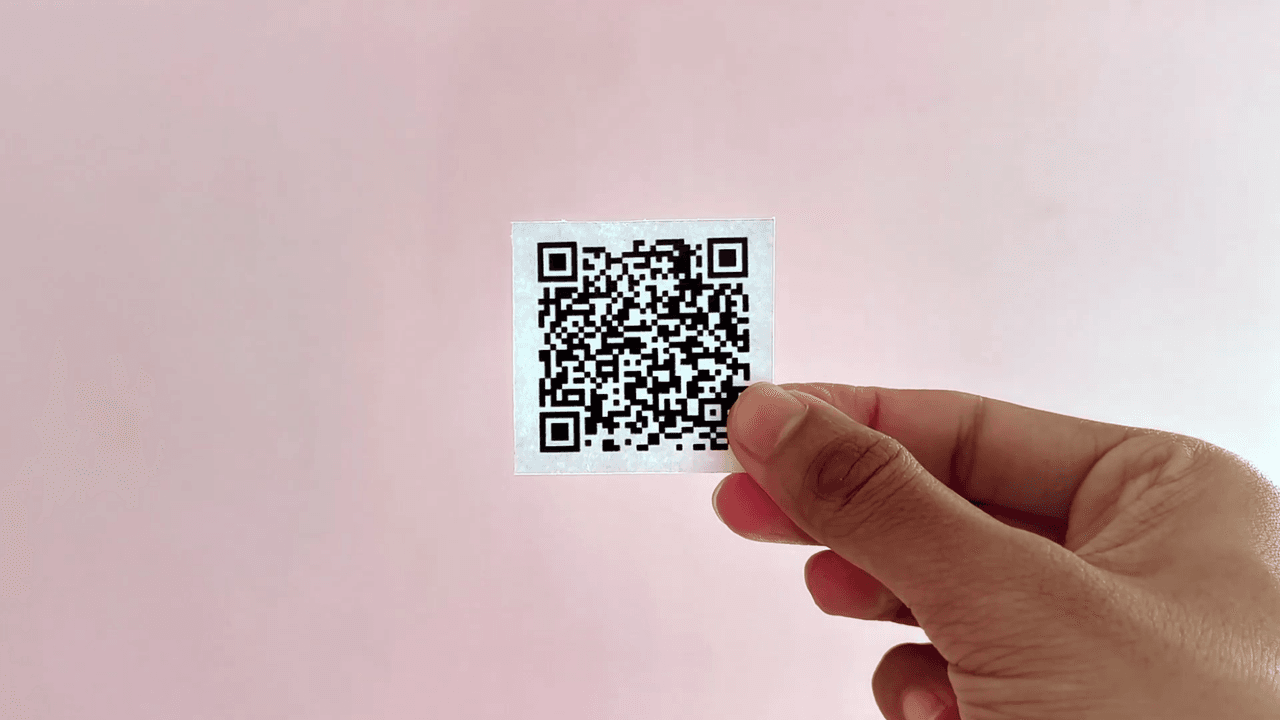
Under the backdrop of continuous breakthroughs in data compression and storage technologies, an innovative achievement by the Maker team has attracted industry attention. They successfully compressed a 2.9MB music file to 21KB, which can be stored using just eight QR codes, and decoded and played back through a neural network, demonstrating new possibilities in data storage and information transmission.
The core of this technology lies in an efficient audio compression algorithm and the high-density information-carrying capacity of QR codes. By employing deep learning models for feature extraction and reconstruction of audio data, the team achieved near-lossless compression. Despite a compression ratio of 1000 times, the audio quality remains high, with a playback duration of two minutes. This breakthrough not only reduces storage costs but also expands the application boundaries of traditional QR codes.
In practical applications, this technology can be widely used for audio distribution in low-bandwidth environments, storage optimization for embedded devices, and information interaction in the Internet of Things (IoT) field. Especially in scenarios where LED displays are integrated with smart terminals, this efficient data processing method can enhance user experience and reduce system complexity.
For the LED industry, similar technological advancements offer more possibilities for intelligent display and content interaction. For example, Guangpu Electronics (GOPRO LED) has continuously invested in R&D in the fields of LED display and smart control in recent years. Its range of smart display products now features strong data processing capabilities and low power consumption, supporting the playback of various audio and video formats. In the future, as data compression and decoding technologies continue to evolve, LED display systems may achieve more advanced interactive functions, driving the industry toward greater intelligence and efficiency.
In summary, the Maker team's achievement represents a significant leap in audio compression technology and provides new ideas and technical support for content transmission and display applications in the LED industry. As related technologies mature and are implemented, the LED industry will witness more diverse application scenarios and development opportunities.
Source:Tom's Hardware