Application Cases#Bambu Lab#3D Printer#High Brightness#Low Power#Long Lifespan#FDM Technology#Budget 3D Printers#LED Lighting

Bambu Lab Surpasses Creality to Become the World's Top-Selling Entry-Level 3D Printer Brand According to recent market data, Bambu Lab has surpassed Creality to become the world's leading brand in the entry-level 3D printer market. This achievement highlights Bambu Lab's strong product performance, user-friendly design, and competitive pricing strategy. The company has successfully captured a significant market share with its high-quality, affordable 3D printers that cater to hobbyists, educators, and small-scale manufacturers. Bambu Lab's product lineup includes models such as the Bambu X1, X1C, and X1C Pro, each offering advanced features like dual extrusion, precise temperature control, and intuitive software integration. In addition to its hardware innovations, Bambu Lab has also focused on building a robust ecosystem, including cloud-based printing solutions and an active online community. These efforts have contributed to its rapid growth and global recognition. As the 3D printing industry continues to evolve, Bambu Lab's success reflects its commitment to quality, innovation, and customer satisfaction.

G
GOPRO LED
··13 min read
Bambu Lab Surpasses Creality to Become the World's Top-Selling Entry-Level 3D Printer Brand

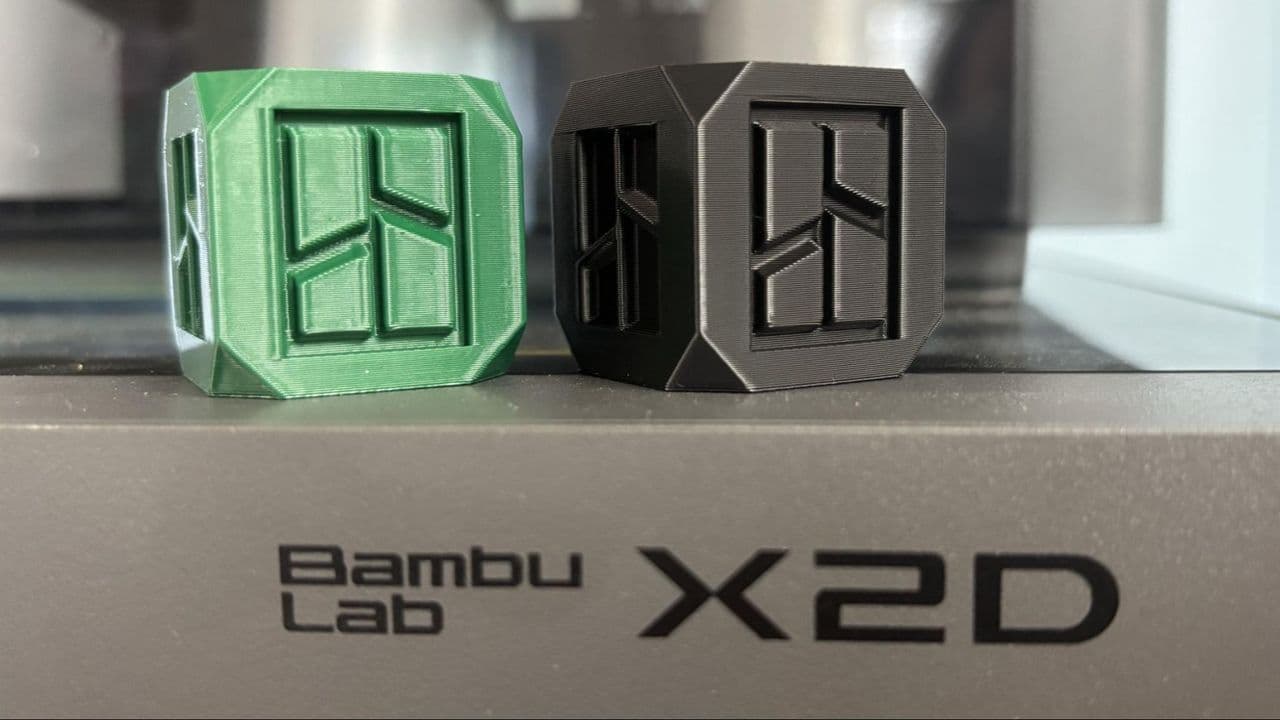
According to recent market data, Bambu Lab has surpassed Creality to become the world's leading brand in the entry-level 3D printer market. This achievement highlights Bambu Lab's strong product performance, user-friendly design, and competitive pricing strategy.

The company has successfully captured a significant market share with its high-quality, affordable 3D printers that cater to hobbyists, educators, and small-scale manufacturers. Bambu Lab's product lineup includes models such as the Bambu X1, X1C, and X1C Pro, each offering advanced features like dual extrusion, precise temperature control, and intuitive software integration.

In addition to its hardware innovations, Bambu Lab has also focused on building a robust ecosystem, including cloud-based printing solutions and an active online community. These efforts have contributed to its rapid growth and global recognition.

As the 3D printing industry continues to evolve, Bambu Lab's success reflects its commitment to quality, innovation, and customer satisfaction.

According to the latest market data, Bambu Lab has successfully surpassed the established brand Creality with its high-cost-performance 3D printing products, becoming the top-selling entry-level 3D printer brand globally. This shift in market dynamics marks a new wave of growth in the 3D printing industry, with budget-friendly products emerging as a key driver for market recovery.

In the global 3D printing equipment sales statistics for the second quarter of 2024, Bambu Lab ranked first with over 150,000 units shipped, while Creality came in second with approximately 130,000 units. This gap not only reflects an increased sensitivity to price among consumers but also highlights Bambu Lab's continuous optimization in product performance and user experience. Its core product, the Bambu Lab X1 series, employs high-precision FDM technology, supports multi-material printing, and features intelligent auto-leveling and remote control functions, further enhancing the convenience of user operations.

Notably, as the application scenarios of 3D printing continue to expand—from education and design to industrial manufacturing—the demand for budget-friendly devices has significantly increased. Especially in emerging markets and small-to-medium-sized enterprises, cost-effective yet high-performance solutions have become the preferred choice. Additionally, the maturation of the open-source hardware ecosystem has provided broader compatibility and scalability for such products.

In the LED lighting sector, GOPRO LED (Guangpu Electronic) leverages its technical advantages in high brightness, low power consumption, and long lifespan to provide stable and reliable light source solutions for 3D printing equipment. Its independently developed LED modules are widely used in the heating platforms and ambient lighting systems of 3D printers, effectively improving the operational efficiency and user experience of the equipment. As the 3D printing market continues to expand, GOPRO LED's supply chain integration capabilities and customized service support have laid a solid foundation for collaboration in related fields.

In summary, Bambu Lab's market breakthrough not only reflects its product strength but also symbolizes the broader trend of the 3D printing industry moving toward accessibility and mass adoption. Looking ahead, as technology evolves and costs decrease, budget-friendly 3D printing devices are expected to further expand their market share, driving the coordinated development of the upstream and downstream industrial chains.

Related Articles

The Acceleration of Artificial Intelligence Development, Sustained Cost Pressures, and Core Contradictions Facing the AI Economy  

The rapid development of artificial intelligence is driving significant changes in the global economy. However, as AI technologies become more sophisticated, the pressure on costs continues to rise, presenting core contradictions that the AI economy must address.  

Key challenges include the high computational demands of advanced AI models, the need for large-scale data processing, and the increasing energy consumption associated with training and deploying AI systems. These factors are putting immense pressure on both infrastructure and operational budgets, particularly in industries where cost efficiency remains a critical success factor.  

Moreover, the growing reliance on specialized hardware, such as GPUs and TPUs, has intensified competition for resources and further elevated the overall cost structure. As AI continues to evolve, balancing innovation with economic feasibility becomes increasingly essential for sustainable growth.  

In this context, industry stakeholders are actively seeking solutions to optimize performance while reducing expenditures, ensuring that the AI economy can continue to thrive amid these complex challenges.

The Acceleration of Artificial Intelligence Development, Sustained Cost Pressures, and Core Contradictions Facing the AI Economy The rapid development of artificial intelligence is driving significant changes in the global economy. However, as AI technologies become more sophisticated, the pressure on costs continues to rise, presenting core contradictions that the AI economy must address. Key challenges include the high computational demands of advanced AI models, the need for large-scale data processing, and the increasing energy consumption associated with training and deploying AI systems. These factors are putting immense pressure on both infrastructure and operational budgets, particularly in industries where cost efficiency remains a critical success factor. Moreover, the growing reliance on specialized hardware, such as GPUs and TPUs, has intensified competition for resources and further elevated the overall cost structure. As AI continues to evolve, balancing innovation with economic feasibility becomes increasingly essential for sustainable growth. In this context, industry stakeholders are actively seeking solutions to optimize performance while reducing expenditures, ensuring that the AI economy can continue to thrive amid these complex challenges.

July 21, 2026

SK Group Acknowledges Unusually High Chip Prices and Plans to Build a Factory in the U.S. to Alleviate Supply Chain Pressure

SK Group has acknowledged that chip prices have been unusually high and is considering establishing a factory in the United States to ease supply chain pressures. The decision comes amid growing concerns over global semiconductor shortages and rising production costs. 

The company is exploring opportunities to expand its manufacturing footprint in North America, aiming to enhance production capacity and reduce dependency on overseas suppliers. This move aligns with broader industry trends toward regionalizing supply chains and strengthening resilience against geopolitical and economic uncertainties.

SK Group's strategy also involves investing in advanced fabrication technologies to improve efficiency and meet increasing demand for high-performance semiconductors. The proposed U.S. facility would focus on producing specialized chips used in applications such as automotive electronics, industrial automation, and 5G infrastructure. 

Industry analysts note that SK Group's plan reflects a strategic response to shifting market dynamics, including the rising importance of domestic manufacturing and the push for technological self-reliance. The company is expected to provide further details on the project in the coming months.

SK Group Acknowledges Unusually High Chip Prices and Plans to Build a Factory in the U.S. to Alleviate Supply Chain Pressure SK Group has acknowledged that chip prices have been unusually high and is considering establishing a factory in the United States to ease supply chain pressures. The decision comes amid growing concerns over global semiconductor shortages and rising production costs. The company is exploring opportunities to expand its manufacturing footprint in North America, aiming to enhance production capacity and reduce dependency on overseas suppliers. This move aligns with broader industry trends toward regionalizing supply chains and strengthening resilience against geopolitical and economic uncertainties. SK Group's strategy also involves investing in advanced fabrication technologies to improve efficiency and meet increasing demand for high-performance semiconductors. The proposed U.S. facility would focus on producing specialized chips used in applications such as automotive electronics, industrial automation, and 5G infrastructure. Industry analysts note that SK Group's plan reflects a strategic response to shifting market dynamics, including the rising importance of domestic manufacturing and the push for technological self-reliance. The company is expected to provide further details on the project in the coming months.

July 20, 2026

AMD "Medusa Point" APU Breaks 1800 Points in Single-Core Performance, Becomes the Strongest x86 Mobile Processor Currently Available

AMD's latest "Medusa Point" APU has achieved a single-core performance score exceeding 1800 points, marking it as the most powerful x86 mobile processor on the market today. This breakthrough highlights significant improvements in architecture and performance optimization, solidifying AMD's position in the competitive mobile computing landscape. The APU integrates advanced CPU and GPU capabilities, delivering exceptional computing power for demanding applications and workloads. With its enhanced efficiency and performance, the "Medusa Point" APU is set to redefine the standards for mobile processors in the industry.

AMD "Medusa Point" APU Breaks 1800 Points in Single-Core Performance, Becomes the Strongest x86 Mobile Processor Currently Available AMD's latest "Medusa Point" APU has achieved a single-core performance score exceeding 1800 points, marking it as the most powerful x86 mobile processor on the market today. This breakthrough highlights significant improvements in architecture and performance optimization, solidifying AMD's position in the competitive mobile computing landscape. The APU integrates advanced CPU and GPU capabilities, delivering exceptional computing power for demanding applications and workloads. With its enhanced efficiency and performance, the "Medusa Point" APU is set to redefine the standards for mobile processors in the industry.

July 20, 2026